

What is the capacity of a meat grinder?
As a seasoned supplier of meat grinders, I often encounter questions from customers about the capacity of meat grinders. Understanding the capacity of a meat grinder is crucial for both home - users and commercial businesses. It not only affects the efficiency of meat processing but also determines whether the machine can meet your specific needs.
Defining Capacity
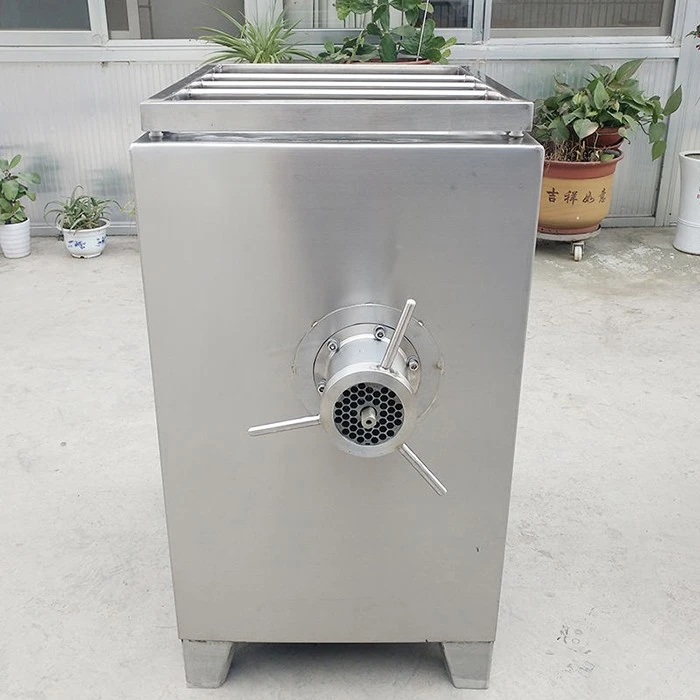
The capacity of a meat grinder can be defined in several ways. Firstly, there is the physical capacity, which refers to the size of the hopper and the internal chamber of the grinder. A larger hopper can hold more meat at once, allowing for continuous processing without the need for frequent refilling. For example, some commercial - grade meat grinders have hoppers that can hold up to 10 - 15 kilograms of meat, while smaller, home - use models may have hoppers with a capacity of 1 - 2 kilograms.
Secondly, there is the processing capacity, which is measured by the amount of meat the grinder can process within a certain period. This is usually expressed in kilograms per hour (kg/h). A high - capacity commercial meat grinder can process anywhere from 500 kg/h to over 2000 kg/h, depending on its power, design, and the type of meat being processed. In contrast, a home - use meat grinder typically has a processing capacity of 10 - 50 kg/h.

Factors Affecting Capacity
Power of the Motor
The power of the motor is one of the most significant factors influencing the capacity of a meat grinder. A more powerful motor can drive the grinding mechanism more effectively, allowing it to process meat at a faster rate. Commercial meat grinders are usually equipped with high - power motors, often ranging from 2.2 kW to 7.5 kW or even higher. These motors can handle large volumes of meat and tougher cuts without overheating or stalling. On the other hand, home - use meat grinders usually have motors with powers between 0.25 kW and 1.5 kW, which are sufficient for occasional home - cooking needs.
Design of the Grinding Mechanism
The design of the grinding mechanism also plays a crucial role in determining the capacity. Meat grinders with a well - designed screw conveyor can feed the meat into the grinding chamber more smoothly and evenly. Additionally, the shape and sharpness of the blades and plates affect how quickly the meat is ground. For instance, some advanced meat grinders use multi - stage grinding systems, which can break down the meat more efficiently, increasing the overall processing capacity.
Type of Meat
Different types of meat have different densities and textures, which can impact the capacity of the meat grinder. For example, lean meat is generally easier to grind than fatty meat because it is more firm and less sticky. Frozen meat also presents a challenge as it is harder and requires more power to grind. However, with the advent of Frozen Meat Grinder, processing frozen meat has become more efficient. These specialized grinders are designed to handle the toughness of frozen meat and can still maintain a relatively high processing capacity.
Capacity Requirements for Different Users
Home Users
For home users, a meat grinder with a relatively low capacity is usually sufficient. Most home - cooking involves small amounts of meat, such as making hamburgers, meatballs, or sausages for a family meal. A meat grinder with a hopper capacity of 1 - 2 kilograms and a processing capacity of 10 - 50 kg/h can easily meet these needs. These home - use models are also more compact and easier to store, making them a practical choice for kitchens with limited space.
Small - scale Butchers and Restaurants
Small - scale butchers and restaurants typically require a meat grinder with a moderate capacity. They need to process larger quantities of meat on a daily basis, but not as much as large - scale commercial operations. A meat grinder with a hopper capacity of 5 - 10 kilograms and a processing capacity of 200 - 500 kg/h would be suitable for their needs. These machines are designed to be durable and reliable, as they will be in continuous use during peak business hours.
Large - scale Commercial Operations
Large - scale commercial operations, such as meat processing plants and industrial food manufacturers, demand meat grinders with extremely high capacities. They need to process thousands of kilograms of meat every day to meet the market demand. Commercial meat grinders with hopper capacities of 15 kilograms or more and processing capacities of over 500 kg/h are essential for these operations. Commercial Meat Grinder Machine models are often designed with heavy - duty components and advanced features to ensure maximum efficiency and productivity.
Other Related Equipment and Capacity
In addition to meat grinders, other related equipment in the meat processing industry also has their own capacity characteristics. For example, a Fish Deboner is used to remove bones from fish. The capacity of a fish deboner is usually measured by the number of fish it can process per hour. Different models of fish deboners have different capacities, depending on their size, design, and the type of fish being processed.
Conclusion
In conclusion, the capacity of a meat grinder is a multi - faceted concept that encompasses both physical and processing capacities. It is affected by factors such as the power of the motor, the design of the grinding mechanism, and the type of meat being processed. Different users, from home cooks to large - scale commercial operators, have different capacity requirements based on their specific needs.
If you are in the market for a meat grinder or related meat processing equipment, it is essential to carefully consider your capacity needs. Whether you are looking for a small home - use model or a high - capacity commercial machine, we have a wide range of products to meet your requirements. Please feel free to contact us for more information and to discuss your specific needs. We are committed to providing you with the best - suited meat processing solutions.
References
- "Meat Processing Technology" by F. J. Honikel
- "Food Process Engineering and Technology" by Gustavo V. Barbosa - Canovas, Maria - Ines Aguilera, Enrique Palou, and Julio M. Welti - Chanes